AI Literacy Is a Control Room for Voice AI, Not a Training Slide
AI literacy for Voice AI is not a one-time training asset. It is a role, scenario, escalation, and audit control loop for enterprise operations.


The EU AI Act entered into force on 1 August 2024, and the European Commission states that AI literacy obligations entered into application on 2 February 2025. For enterprises deploying Voice AI, that is not a one-time training reminder. It is a signal to build an operating control room around human judgment.
AI Literacy Is Not a Training Certificate
Article 4 of the EU AI Act says providers and deployers of AI systems should take measures to ensure a “sufficient level of AI literacy” for staff and other people involved in the operation and use of AI systems. The operational phrase matters: operation and use.
In Voice AI, a single human agent is not simply reading a screen and answering. The AI listens to the customer, checks CRM context, chooses the next question, calls tools, and escalates when needed. Literacy is therefore not a general lecture about what AI is. It is the practical ability to answer these questions during a live customer journey.
- Can the AI continue this call safely?
- Is the customer asking for a high-risk decision?
- When should a human supervisor take over?
- What evidence must remain for audit and review?
Training explains what AI is. Literacy helps the team decide what to do on this call, right now.
Translate Regulation Into Control-Room Language
The European Commission’s AI Act timeline sets 2 August 2026 as the general full-application date, while prohibited AI practices and AI literacy obligations applied from 2 February 2025. For enterprise operators, this belongs in the current operating checklist, not a future compliance folder.
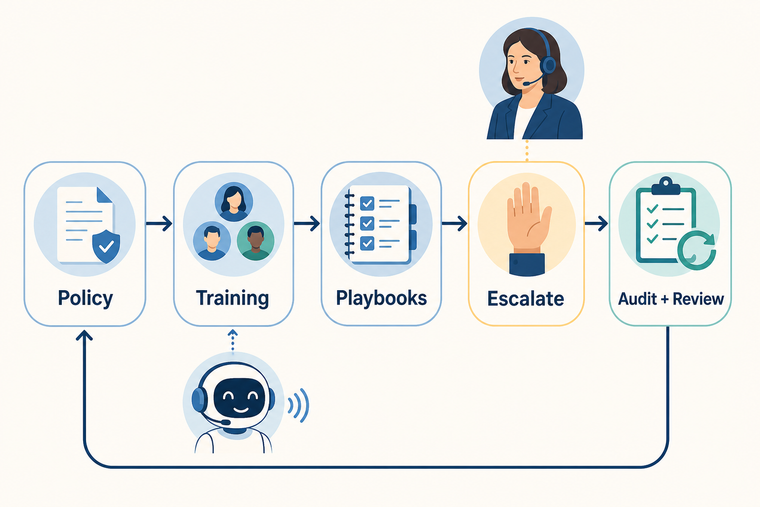
For Voice AI teams, AI literacy should be translated into five operating layers.
1. Policy context     — which regulation or internal policy applies to this call
2. Role training      — what sales, CS, QA, and managers must each decide
3. Scenario playbook  — where automation stops for refunds, complaints, PII, contracts
4. Human escalation   — when a person must approve or take over
5. Audit evidence     — what logs and reasons remain after the call
This is how a training deck becomes an operating tool. A generic instruction to “use AI responsibly” does not create a behavior on the floor.
Four Moments Where Voice AI Literacy Breaks
Voice AI risk does not appear only when a model gives a wrong answer to a hard question. More often, the risk appears when the organization has not defined where human judgment enters the call flow.
- Ambiguous customer consent — recording notice, AI disclosure, and follow-up consent are mixed together, but the agent moves ahead.
- Policy exceptions — refund, cancellation, financial, medical, or insurance-related questions exceed the safe automation boundary.
- Missing CRM context — the agent gives a confident answer even though the customer journey data is incomplete.
- Context loss after handoff — a human takes over but does not receive the reason, summary, or required next action.
These failures are not just “people do not understand AI.” They happen because the operating standard has not been embedded into the conversation path.
What ISO/IEC 42001 and NIST AI RMF Suggest
ISO describes ISO/IEC 42001:2023 as an AI management systems standard that gives organizations a structured way to manage AI-related risks and opportunities while balancing innovation with governance. NIST’s AI Risk Management Framework also provides a framework and playbook for managing AI risks.
The practical lesson for Voice AI is straightforward. Literacy is weak when it sits only with the training team. It becomes durable when it is part of the management system.
At minimum, a Voice AI team should maintain:
- a one-page decision guide per role: agent supervisor, QA, ops manager, sales leader;
- scenario rules that define allowed, blocked, and approval-required automation;
- logging standards beyond transcripts: consent, escalation reason, tool result, override;
- an update rhythm for policy, product, campaign, and script changes.
BringTalk POV: LQA and FUA Need Literacy Too
LQA, or Lead Qualification Automation, classifies leads quickly. FUA, or Follow-Up Automation, re-engages customers after an interaction. Both create value only when the boundary between automation and human approval is explicit.
A high-intent lead asking about price, contract terms, or personal-data processing creates a different operating question than a simple lead score.
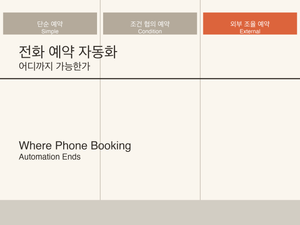
Safe to automate: product questions, scheduling, basic material requests
Conditional: price range, campaign benefit, existing contract context
Human approval: exception discount, legal responsibility, sensitive data, official promise
AI literacy is the shared way frontline teams read that boundary. What the agent said matters. But when the human should pause, verify, and take over matters more.
Execution Checklist: Design Before Training
Before producing a training video, an enterprise operating Voice AI should define five things.
- High-risk call types — payment, contract, healthcare, insurance, complaints, personal data.
- Role accountability — what AI ops, agents, QA, security, compliance, and sales leaders each verify.
- Handoff language — reason, summary, and required action passed to the human.
- Audit fields — consent, disclosure, tool result, escalation, human override.
- Update rhythm — who updates the playbook when policies, products, or scripts change.
Only then does AI literacy training become concrete. Training is not the operating system; it is the format by which operating design reaches people.
Conclusion: Literacy Is a Quality Control Mechanism
If AI literacy is treated as a regulatory phrase, it ends as a checkbox. In Voice AI, it affects call quality, handoff accuracy, and post-call accountability at the same time.
The goal is not to make every employee a model expert. The goal is for teams to recognize the same risk signal, pause at the same moment, and escalate with the same evidence.
Sources: European Commission, “AI Act” application timeline; EU Artificial Intelligence Act, Article 4: AI literacy; ISO, “ISO/IEC 42001:2023 — AI management systems”; NIST, “AI Risk Management Framework.”